
Summer 2026 Newsletter
Dear friends,
GBLS works to ensure justice and fairness for everyone in our community. From commemorating Pride Month through staff festivities and exciting new legal work, to fighting for the liberty and safety for our immigrant clients and community members in the face of increasingly challenging circumstances, to advocating for economic opportunities and second chances for people with criminal records, we are busier than ever this summer. Many hands make light work, however, and we are grateful for our many bright and eager summer interns, our talented volunteers, and our dedicated staff. Read on to learn more about the individuals behind the victories and how you can join us in this important work.
Sincerely,
Jacqui Bowman
Executive Director
GBLS launches Name change clinics
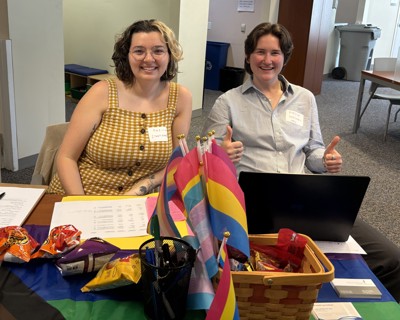
On June 6th, GBLS held its first name change clinic. For many transgender people, a legal name change is a vital part of their transition. Having important documents reflect the names they use in day-to-day life makes it easier to apply for jobs, school, and public benefits, bringing their legal identity in line with their lived experience.
The inaugural clinic had a robust turnout for both clients and volunteers. Since it was held at the Edward Brooke Courthouse, many clients were even able to have their names changed the same day!
The new name change clinic expands the work of GBLS’ LGBT Family Law Project, which serves LGBTQ+ people in family law matters, including custody, divorce, and intimate partner violence. The project particularly prioritizes services to people with multiple barriers to justice, including non-citizens and non-English speakers, and works closely with LGBT community organizations for referrals and trainings.
Though this is the first name change clinic GBLS has held, it won’t be the last. We’re exciting to continue providing this vital service to our transgender neighbors.
Happy Pride from GBLS!
In Conversation with GBLS Staff: Immigration Unit
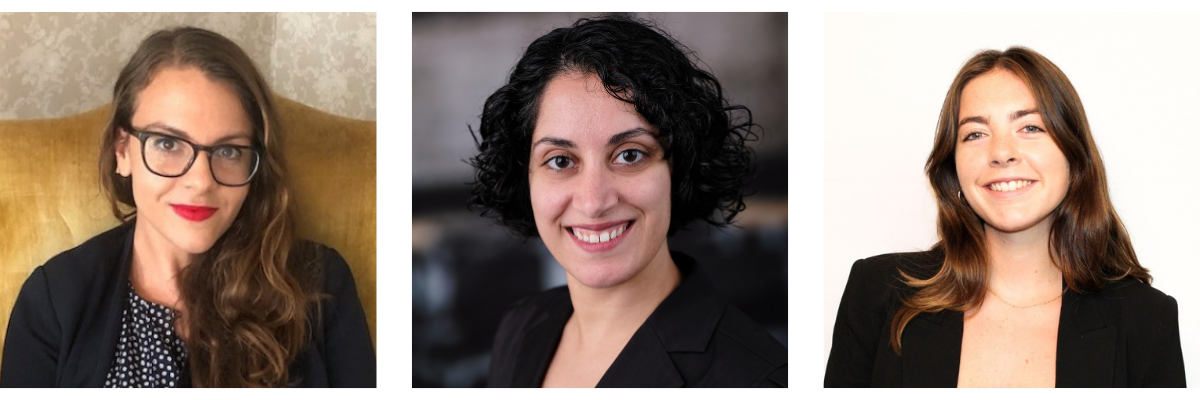
GBLS’ immigration legal team is on the front lines of fighting for immigrant justice and due process. We chatted with Annery Miranda and Aly Maddan, Immigration Unit attorneys, and Raissa Rogers, a recent and returning intern in the unit and a rising 3L at Northeastern School of Law (NUSL), about their motivations, cases, and what we can all be doing to help.
GBLS: Why did you decide to become an immigration lawyer?
Annery: I grew up in a community that included mixed status families and immigrants. Being part of the Latin American diaspora myself, my world was shaped in constant communication with another part of the globe. From a young age, it seemed that borders were permeable for some and painfully immovable for others. Immigration law and policy cast such a big shadow over so much of the community; it felt important to do what I could in this arena. I knew it was rare for a person with my particular combination of socioeconomic and ethnic background to make it to law school, so I told myself that if I ever became a lawyer, I would serve those who helped get me here.
Raissa: I haven’t yet decided what type of lawyer I want to be, but I have loved immigration work thus far. The stakes are really high, and the results are often visible very quickly. It gives you the opportunity to really connect with clients and help in a very tangible way.
Aly: Coming from a family of immigrants, and as an immigrant myself, immigration has always been personal. In law school, I had the privilege of working on an asylum case through the Immigrant Justice Clinic. The more I worked with clients, the more I saw immigration law not simply as a legal practice area, but as a way to stand alongside people seeking safety, stability, and opportunity. Immigration law sits at the intersection of law, human rights, and community, and I knew it was where I wanted to dedicate my career.
GBLS: Aside from working together at GBLS, you all met in an interesting way. Tell us about that.
Aly: Annery and I met when we were both students at NUSL. We connected on a school-sponsored trip to the U.S.-Mexico border in February 2020. A group of students, along with our immigration law professors, went to volunteer at Dilley, an immigrant detention center for women and children in South Texas. We reconnected in 2022, when Annery had her co-op at GBLS and then she returned to the unit not long after as an attorney. Last summer, I recommended Annery as a candidate for the "Reflections on Lawyering" program at NUSL, a class I had been teaching for a few terms. She was invited to be an instructor, which is how she met Raissa, who also became our intern!
GBLS: Can you tell us about Raissa’s internship and the work she’s been doing at GBLS?
Raissa: My law school (NUSL) partners with GBLS for a public interest spring break volunteering opportunity. For my spring break, I primarily worked on client intake for a U visa case. It was a great learning experience getting to take the lead in interviewing the client and developing her story in narrative form. I also was able to see how the work made a difference in someone’s life. After spring break, I reached out to Aly, and Annery, and we worked it out so that I could come back to help when I have time this summer. I can’t wait to see what August holds when I return!
Annery: From having her in class, Raissa really stood out as thoughtful, sharp, and a skilled researcher/writer. Her internship coincided with some pretty hefty emergencies, and her work ended up being indispensable to our success at the First Circuit, which prevented a client’s imminent deportation.
Raissa: Working on the First Circuit stay of removal was definitely a highlight for me. Annery had given me the run-down of the situation and asked me to do some research on an issue. After I did the research, she asked if I wanted to take a stab at the reply to the government. I was so excited to get an opportunity to do such substantive work, and I was even more motivated to do it well because of the urgency of the situation. As a student, it was extremely rewarding to not only be trusted with such work, but to have it result in a successful outcome.
GBLS: What's one thing that you wish people knew about your work?
Annery: The language of "legal" and "illegal" immigration oversimplifies a more complicated reality. Immigration status is often in flux. People who cross a border—even with the express permission of government officials—may find themselves categorized as 'legal' one day and 'illegal' the next, depending on shifting political ideologies. Human movement does not occur in a vacuum. It is shaped by policy decisions that create the conditions under which people move. It’s easy to blame the individual, but so many larger forces are pressing down on the individual that need to be accounted for.
Aly: Behind every case is a person who is trying to keep their family together, find safety, recover from trauma, and/or build a future. Immigration policies are often discussed in abstract terms, but their consequences are concrete. A policy change can determine whether a child reunites with a parent, whether a survivor of violence finds protection, or whether someone is forced to return to danger. Immigrants strengthen our communities every day. At a time when immigrants are increasingly being portrayed as problems to be solved rather than people to be valued, I hope more people recognize their humanity, resilience, and contributions.
GBLS: Given the current immigration crisis, how can "regular" people help?
Annery: The fees for almost every application for immigration relief, work authorization, or appeal process have increased exponentially in the past year and a half. Already complex cases have become even more so, requiring the use of experts who charge for their services. More people are being detained. Anything from donations to crowd sourcing to fundraising can be really helpful.
Many immigrants are scared and don’t know who to trust. Having safe neighbors and people to rely on can help people stay sane. Also, when people who know I am an immigration lawyer check in on me, it's always really touching because this is a hard time for advocates, too, and having the moral support of those around me helps me to keep going. A lot of us are very tired.
Raissa: Being in community with others is far more important than we realize sometimes. This can be as simple as supporting immigrant-run businesses, checking in with your neighbors regularly, sharing resources, learning about other cultures, and staying informed about what is going on in your local community.
Aly: People can support immigrants and immigrant-led organizations by donating, volunteering at legal clinics, accompanying individuals to immigration court hearings or appointments, showing up at community events and protests, creating art and media, writing op-eds, contacting elected officials, or simply having conversations with friends and family about what is happening and why it matters. The immigration system can be incredibly complex, isolating, and intimidating. One of the most powerful things people can do is help ensure that immigrants do not have to navigate it alone.
Most importantly, people who want to help should listen to immigrants and uplift their voices and leadership. Far too often, immigrants are discussed, studied, and debated without being given a seat at the table. Real change happens when immigrants are not only heard but empowered to shape the policies and solutions that affect their lives. It is up to all of us to ensure immigrants are prioritized and valued—not just for their labor or economic contributions, but for their humanity, dignity, and the vital role they play in our communities.
Thank you, Aly and Annery, for your ongoing work with and on behalf of GBLS’ immigrant clients, and thank you, Raissa, for joining us in this work! If YOU would like to help GBLS serve our immigrant neighbors, friends, and family, please donate today to the 2026 Immigration Litigation Fund.
Advocacy Spotlight: A Clean Slate for MA Residents
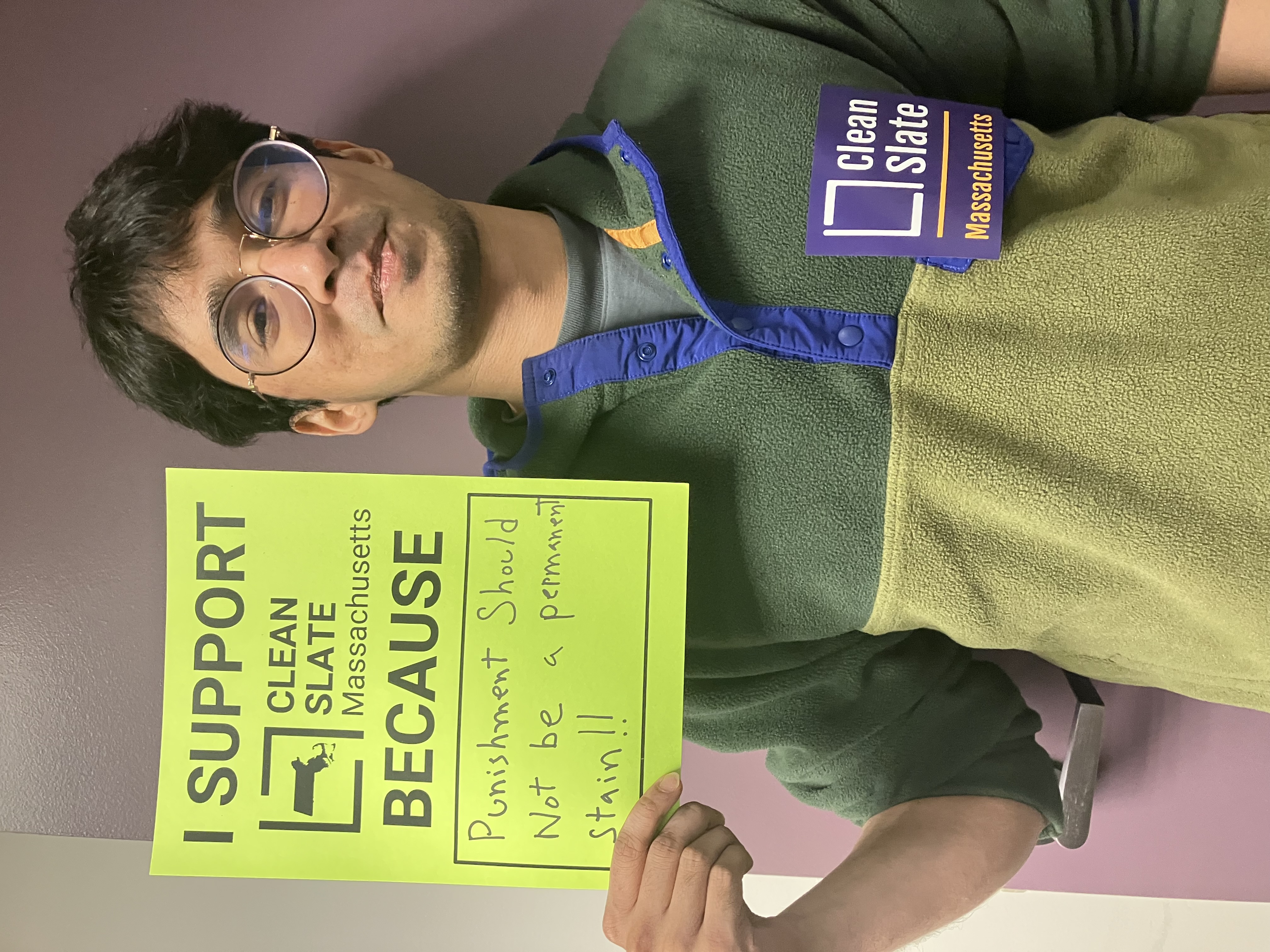
GBLS continues to work on statewide Clean Slate legislation, which would automate the criminal record sealing process and eliminate the need to file petitions with Probation. Criminal records – which exist even if you are found not guilty or charges are dismissed – are a major driver of poverty, especially in communities of color. Less than 15% of people eligible to seal their records actually follow through on sealing because the process is hard to figure out, burdensome, and backlogged. Meanwhile, having a criminal record, even if found not guilty, can be a barrier to gainful employment, stable housing, and other opportunities. Everyone deserves the right to work, support their families, and engage productively in their community.
Take action: GBLS advocates are hopeful that this will be the year to deliver second chances to countless people in the communities we serve. Email or call MA Senate Ways & Means Chair Michael Rodrigues to ask him to favorably advance the Clean Slate bills: Michael.Rodrigues@masenate.gov or (617) 722-1114.
GBLS’ Annual Meeting
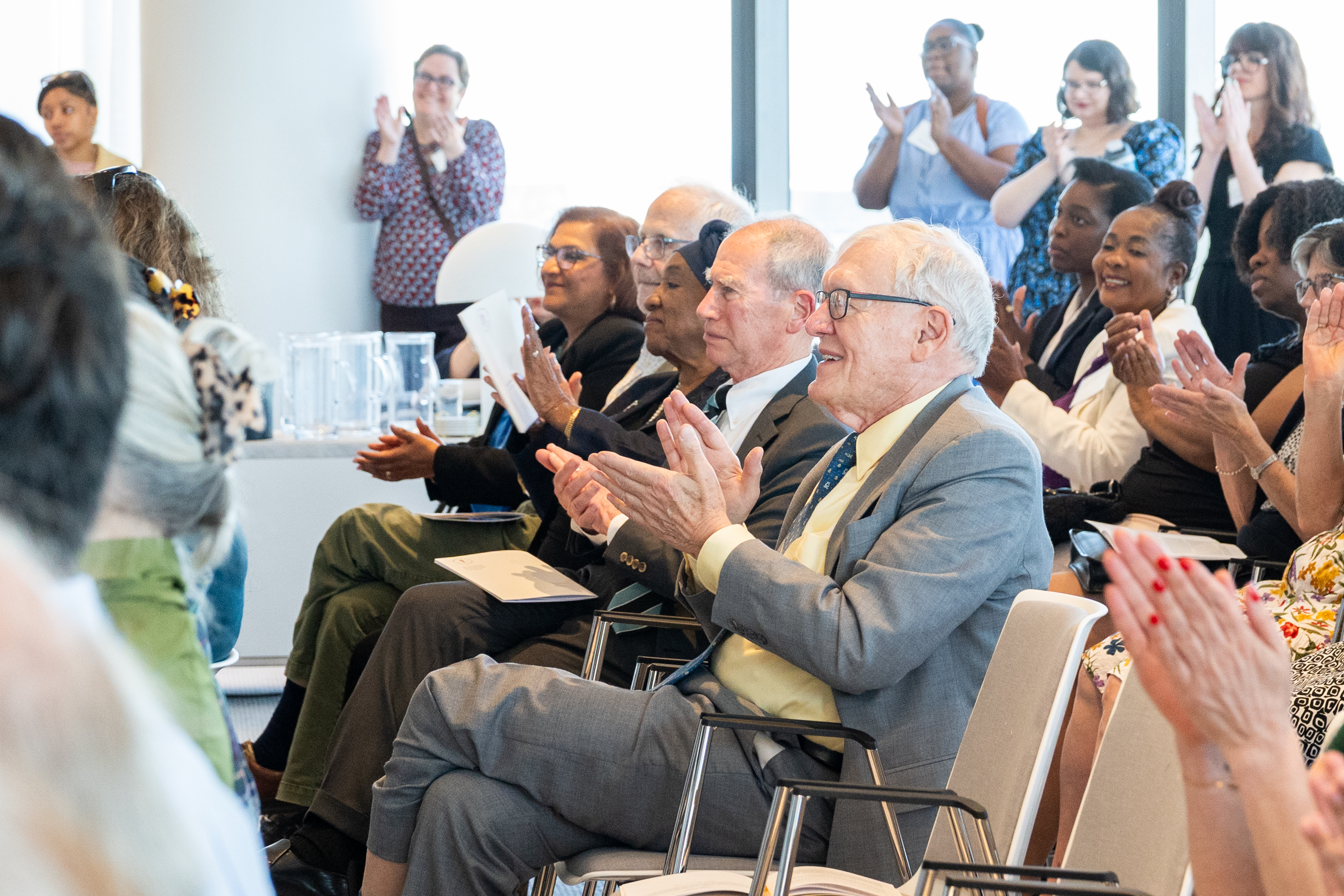
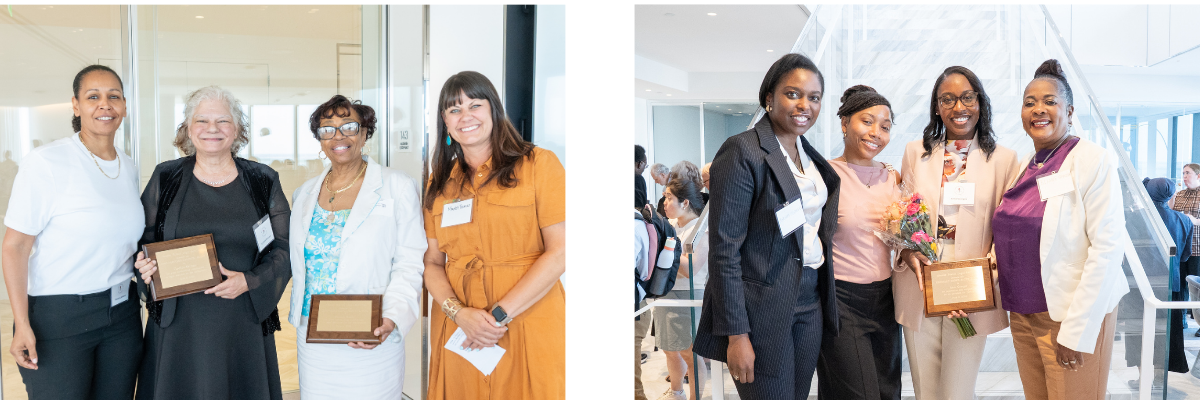
On June 9th, GBLS held its Annual Meeting of the organization’s Corporation and Board of Directors, hosted by Jones Day in their new South Station offices. Speakers celebrated GBLS’ successes and impact over the past year, with this year’s guest speaker – a former client who received a range of services from GBLS – telling the crowd:
For many people, legal aid means lawyers and courtrooms. For me, it meant something much deeper. It meant safety. It meant hope. It meant dignity. It meant a future. GBLS did not just represent me in court. They helped me rebuild my life.
One of the highlights of the 2026 meeting was the annual presentation of awards. The following individuals were honored for their contributions to GBLS’ clients and work.
Anne Georges, Senior Attorney, received the Reginald Heber Smith Award, for building community within and outside GBLS, innovation and excellence in legal work, and for bringing a fresh perspective to GBLS’ legal advocacy as an advocate for justice with fewer than ten years of experience.
Carolina Africano, Senior Attorney, Rita Dixon, departing Board Member, and Hannah Tanabe, Senior Attorney, each received the Dow-Gardiner-Landrum Award, which honors staff and board members who demonstrate a long-term commitment to ensuring that poor people have access to justice.
James “Mac” McCreight, volunteer attorney and retired staff, received the Richard W. “Archie” Southgate Volunteer Award, which honors an outstanding volunteer at GBLS.
The following staff were also recognized for their milestone years of service to GBLS: Luz Arévalo (25 years), Migdalia Cotto (25 years), Maria Fernandes (40 years), Deborah Filler (40 years), and Margaret Jean (45 years).
At the meeting, GBLS welcomed new board member Brian K. Lee and recognized the following departing board members for their service: Timothy Blank, Stephen Brake, Zachary Coseglia, Rita Dixon, Elizabeth Shea Fries, Marlon Hernandez, Ronda Jackson, Corinne Kelton, Jurett Mooltrey-Weathers, David Rozenson, Jeffrey Rudin, Sherri Tucker, and Alma Woodberry. We thank them for their leadership on the board and in our community.
GBLS' New Video about Our Work
We are pleased to present a new view into GBLS' work for - and with - our clients. From preventing homelessness to protecting survivors of domestic violence to helping immigrants, seniors, and people with disabilities access justice, GBLS works every day to ensure that our most vulnerable neighbors have access to the legal help they need.
Watch the video to learn more about our work, our clients, our staff, and GBLS' impact in our community. And share it with friends and family to help them learn about GBLS and civil legal aid. Thank you to our guest stars and the entire video production team!
GBLS in the news
-
GBLS attorney Obioma Okonkwo spoke at a State House briefing on a proposed bill to reduce prison sentences and punishment for women who defended themselves against acts of domestic violence. “Many people in our prisons are there because their lives have been shaped by abuse, by trafficking and post-traumatic stress disorder,” she says. “The Survivors Act is an effort to bring the law closer to reality...It simply gives the courts the tools to recognize that context matters, especially for survivors.” (The Eagle-Tribune)
-
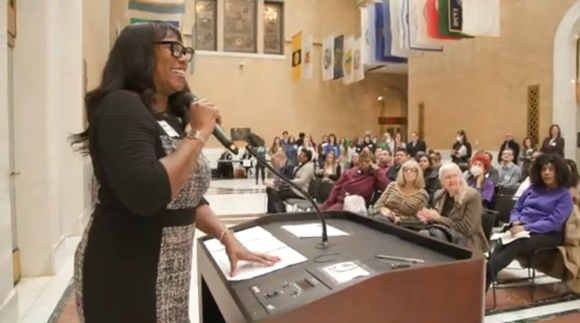
GBLS' Executive Director Jacquelynne Bowman joined WCVB CityLine to discuss how recent federal policy changes impact our low-income immigrant neighbors and their US citizen children, and how GBLS is helping. Watch here.
-
GBLS paralegal Sophie Gillard shared the positive impact of eviction sealing legislation passed last May on our clients. “With these cases removed (from) their records, they have been able to leave shelters, secure accessible housing for themselves and their disabled children and become eligible for subsidies,” she said. (WGBH)
-
GBLS housing attorney Todd Kaplan weighed in on the unscrupulous tactics landlords and brokers are using to skirt the law and continue to charge tenants broker fees. (WBUR)
-
Yvette Golay, Senior Attorney in GBLS' Elder, Health and Disability Unit, provided critical advice at the June 3 session of the Age Strong Commission's “Death and Dying” series. (NBC Boston)
-
Immigrants, including a GBLS client, shared their stories of being detained and deported at a meeting with Congresswoman Ayanna Presley in Chelsea. (WGBH)