
Spring 2026 Newsletter
Dear friends,
I’m proud to say that GBLS shines when the pressure is on, and the pressure is certainly on. Navigating between drastic policy changes at the federal level, to local opportunities to improve the circumstances of our client communities, GBLS is pressing on. As you will read below, our team is busier than ever: advocating for clients’ rights and freedoms, preserving our clients’ household stability, collaborating with vital partners, making changes that benefit everyone in our community, and more.
Over the past year, GBLS has experienced a rapid increase in demand for our immigration services. With aggressive changes to federal immigration policies and procedures over the past year, many of our immigrant neighbors now face an extremely precarious process to achieve immigration relief and lasting legal status in the United States. The good news is that GBLS has recently received three new grants and two new catalyst donations to help us expand our immigration staffing. More advocates means that GBLS can help more people.
At the same time, however, expenses tied to immigration cases have also increased dramatically. Filing fees, expert costs, interpretation services, and other litigation-related expenses are placing a growing strain on our organization. The low-income clients that GBLS serves cannot afford to pay these costs themselves, and we cannot absorb these added expenses without help. GBLS has launched a special fund – our Immigration Litigation Fund – to help us do this work. Please read more about the Immigration Litigation Fund on our website, donate generously if you can, and help us spread the word about this urgent need. Thank you for joining us in protecting our immigrant neighbors.
In solidarity,
Jacquelynne Bowman
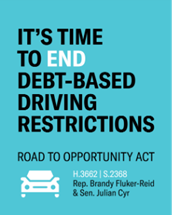
GBLS is part of a statewide coalition advocating to pass the Road to Opportunity Act (H.3662/S.2874). The Road to Opportunity Act is a critical piece of legislation that would end Massachusetts’ practice of taking away someone's driver's license solely because of debts unrelated to dangerous driving, such as unpaid parking tickets, tolls, and other non-safety related debts. By eliminating these restrictions, the bill aims to:
- Support safe drivers and their families
- Remove barriers preventing residents from getting to work, medical appointments, and school
- Reduce unnecessary burdens on the court system
- Strengthen the Massachusetts economy by helping people stay employed
GBLS’ advocacy – by both staff and clients impacted by this issue - has resulted in the bill making progress through the legislative process. In January 2026, the Massachusetts Legislature’s Joint Committee on Transportation issued a favorable report for the Senate version of the bill. GBLS’ advocacy with Governor Healey’s office led the Governor to put important provisions of the Road to Opportunity Act into her proposed budget.
Get involved:
- Read coverage about the issue from The Boston Globe and WCVB.
- Tell your state legislators to pass the Road to Opportunity Act and end debt-based driving restrictions.
- Spread the word: Massachusetts Voters Overwhelmingly Support Passage of the Road to Opportunity Act - ACLU of Massachusetts
- Volunteer to help: Contact GBLS’ Volunteer & Pro Bono Coordinator Amanda Melvin (amelvin@gbls.org) if you’d like to learn how you can help support the legislation.

SPEAK UP TO KEEP FAMILIES TOGETHER!
Since 1996, federal law has allowed families with mixed immigration statuses to live together in HUD housing. HUD issued a new proposal on February 20, 2026, to end this long-standing policy, forcing families to face an impossible choice: separate or lose their housing. If finalized, an estimated 80,000 residents will be evicted — including 37,000 children, most of whom are U.S. citizens. There is a public comment period to speak out against HUD’s proposal to separate immigrant families. Comments are due by midnight on April 21.
Submit your comments to HUD opposing the proposed rule change
PROTECT NONPROFITS & THE COMMUNITIES THEY SERVE!
The General Services Administration has proposed a new policy mandating that every federal grant applicant sign a certification making sweeping commitments to abandon DEI practices and agreeing to overbroad restrictions related to immigrants and anti-terrorism language so vague it can include lawful organizational activities. Noncompliance could expose nonprofits to a range of actions including civil liability and even criminal penalties. This will have a deeply harmful effect on nonprofits across the country and place extreme limitations on the work they can do. The public has until March 30 to submit public comments in opposition to the proposal.

In Conversation with GBLS' New Community Engagement Director
In the course of GBLS’ recent strategic planning process, one of the clearest calls to action within the organization was to prioritize and increase community engagement. As a legal nonprofit, GBLS is often most effective when working in partnership with other community-based organizations and with direct input from the people who need our help. To enhance our impact with and on behalf of the communities we serve, GBLS hired an inaugural staff position to support this work.
We sat down with Jennifer Effron, GBLS’ new Community Engagement Director, to learn more about her role and what she’s working on.
GBLS: What is your role at GBLS and how long have you been in it?
Jennifer Effron: I am the Community Engagement Director at GBLS and I started in November 2025, so I am still very new!
The overarching goal for my work is to ensure that GBLS’ priorities are driven by community needs. This means that, as an organization, we are out in the communities we serve listening and responding to what we are hearing, even if that means that we need to shift some of our current priorities. The Community Engagement role is also tied to the data “arm” of GBLS' new strategic plan, so that we can use data along with community input to ensure that we are holistically serving our clients and that we are reaching all of the communities within our service area.
GBLS: What about GBLS' work or mission resonates with you?
JE: GBLS not only helps people facing emergency situations, but we also empower people to fight for their rights. In a broader sense, this work also addresses deep power imbalances in a way that inspires me. I am really proud to be part of this work right now.
GBLS: What is "community engagement"?
JE: To me, community engagement means developing and maintaining relationships where we are mutually listening and learning from each other and working together. The overarching goal of my role is to ensure that the needs expressed by the communities in need of our services are driving our priorities. I think my past roles, whether as the Policy Director at the Boston Society for Architecture or as a Main Streets Director, have taught me a lot about how to come into spaces with open ears and to serve as a connector between partners.
GBLS: What is GBLS doing right in the community and where could we improve?
JE: GBLS already has so many great existing community partnerships, both formally and informally across the program. I see part of my role as understanding the organization-wide landscape of community connections so that we can expand existing partnerships across more practice areas and so that all the communities we serve understand the array of services GBLS provides. One of the challenges that sits on my mind is how we can balance being responsive to the needs we are hearing about without just trying to pile on more. If there was an easy answer to this, I wouldn’t be here! It will force us all to be thoughtful and creative in this process.
Thank you, Jenny, for joining the team and helping us continue to build and strengthen our community!
MBTA Disability Access Oversight Transitions to Community
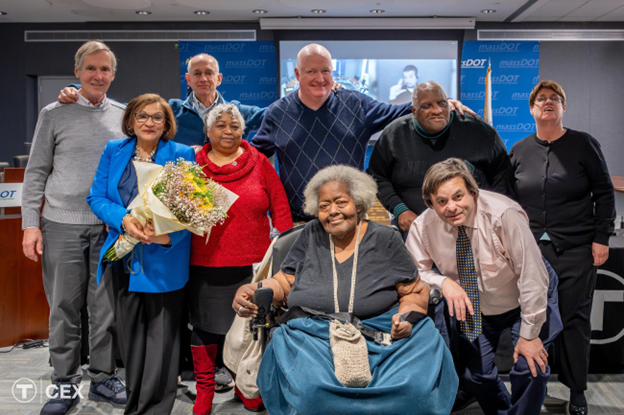
On December 10, 2025, named plaintiffs and involved parties in the 2006 Joanne Daniels-Finegold, et al. v. Massachusetts Bay Transportation Authority case and settlement signed an agreement to officially transition permanent oversight to the Riders’ Transportation Access Group (RTAG), marking an exciting shift from the court-appointed independent monitor and GBLS oversight model to a new, community-based monitoring model in partnership with the Boston Center for Independent Living and the RTAG. Kudos to all involved in this accomplishment!
GBLS in the news
- GBLS tax attorneys Angela Divaris and Luz Arevalo were interviewed in the Boston Globe about legislation that would provide more flexibility for residents struggling to pay state tax debt.
- “We remain deeply concerned by the ongoing delays claimants are facing when attempting to access unemployment insurance benefits,” Jason Salgado, a GBLS attorney, says about the failures of Massachusetts’ new system for unemployment benefits. (The Commonwealth Beacon)
- “I think it’s terrible that we have a lot of shelter placements that we’re not using, and that the amount of families that are able to access shelter is so low when the demand doesn’t seem to be lower,” said GBLS attorney Elizabeth Alfred, about tightening shelter restrictions (The Boston Globe).
- GBLS attorney Audrey Richardson weighs in on the declining number of au pairs in the United States, citing worker’s rights protections that make the potentially exploitative au pair arrangement less feasible (WGBH).